Wire Shelving is a storage system made from metal posts and open-grid shelves. Its design lets air and light pass through, while adjustable levels accommodate boxes, tools, pantry goods, or cleaning supplies. Many systems use steel with a protective finish, though materials and coatings vary by product. That distinction matters in damp rooms or places where shelves face frequent contact.
You will find wire shelving in homes, garages, stockrooms, kitchens, and commercial work areas. It can keep stored items visible and reduce dust collecting on shelf surfaces, but it does not make every item easy to store. Small parts may slip through the grid, and uneven loads can make a unit feel unstable. Check the manufacturer’s load rating, assemble the frame as directed, and place heavier objects on lower shelves. A level floor helps, too.
This guide explains what wire shelving is, how its parts work, and where it is commonly used. It also considers practical advantages, limitations, and selection factors such as shelf spacing, finish, and capacity. The details can seem ordinary. They affect daily use. A wire unit may suit bulky bins, yet prove awkward for tiny supplies or delicate items without liners. No shelving system is maintenance-free; inspect connections and clean spills before they become a problem.
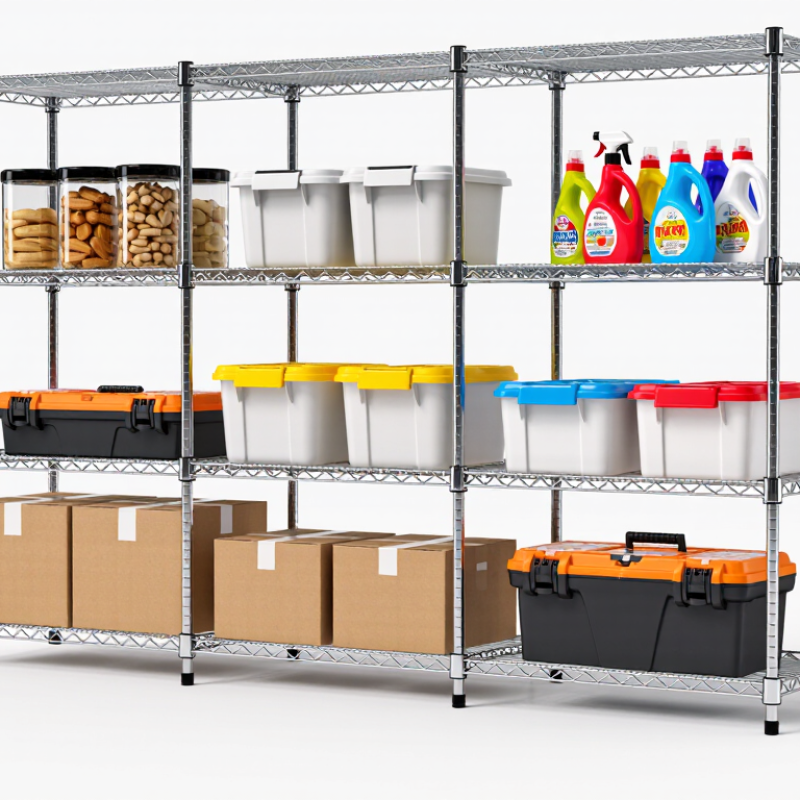
Wire shelving is a storage system made from metal wires formed into open shelves. Its design usually combines horizontal wires with crossbars and upright posts. The crossings are welded or joined to create a rigid grid. This open construction lets air and light pass through, while dust is easier to spot than on a solid shelf. It looks simple. In practice, the spacing between wires affects which items sit securely.
Many systems use adjustable shelves that attach to posts with clips or sleeves. The posts support the frame, and the connectors hold each shelf at the chosen height. Wire thickness, shelf dimensions, and connection quality all influence stability and load capacity. Check the maker’s stated limits before loading a shelf, and distribute weight evenly. A small box may wobble if its base rests across widely spaced wires. Not every setup feels perfectly steady on an uneven floor.
Tips: Place a firm liner under small or soft-bottomed items. Keep heavier objects low, and inspect connectors after changing shelf heights. A quick level check can help, though it will not fix a sloping floor.
Wire shelving is usually made from carbon steel or stainless steel. Carbon-steel shelves often have chrome or epoxy finishes; stainless steel suits damp areas better, though it can still stain if neglected. NIST’s Chemistry WebBook gives elemental iron a density of 7.874 g/cm³. Shelf steel is an alloy, so this figure is a material reference, not a shelf-weight or load rating. That distinction is easy to miss.
Most units use welded wire decks, upright posts, and split sleeves or collars that hold each shelf in place. The open grid lets air and light pass through, while raised wire edges help keep small items from sliding. Capacity depends on wire gauge, weld quality, shelf span, and how evenly weight is distributed. Check the maker’s load rating; a single heavy box can stress the center.
Tips: Match the finish to the room. Wipe damp shelves dry, and check welds and collars during routine cleaning. A loose collar may look harmless. It can let a shelf tilt. For food-service equipment, NSF/ANSI 2 is a useful sanitation reference, but it does not replace the product’s load rating.
Wire shelving is a storage system made from metal wires joined into shelves, often with posts or wall brackets for support. Its open design lets air and light pass through, which can help stored items stay visible and reduce dust buildup on surfaces. The gaps matter, though: small jars or narrow boxes may wobble or slip through. A flat shelf liner can help, but it also limits airflow.
The shelves support pantry containers, folded towels, office supplies, and bins in homes or stockrooms. Place heavier items near the posts, where support is usually strongest, and spread weight across the shelf instead of stacking it all in one spot. Check the shelf’s stated capacity and follow the installation instructions; ratings can change with shelf spacing and mounting method. A shelf may look level while one post sits slightly loose. That detail is easy to miss. Tighten fittings, confirm wall brackets are secured to suitable supports, and recheck stability after loading. Wire shelves are adjustable, but frequent changes can leave stored items uneven. A little rearranging may be needed.
Wire shelving is common in pantries, laundry rooms, closets, and garages. Its open design lets air circulate and makes stored items easy to see. In a pantry, cans and jars stay visible, while baskets can hold small packets that might slip through the gaps. Visibility matters. In closets, shelves can hold folded clothes, shoes, or storage bins without making a small space feel too enclosed. A shelf liner helps keep narrow items level.
Retail stockrooms and workshops also use wire shelving because workers can scan supplies quickly and adjust shelf heights as needs change. In commercial kitchens, the open structure can support airflow around dry goods and equipment, though shelves should suit the cleaning routine and environment. Garages often use sturdier units for tools, paint cans, and seasonal gear; heavier loads need correctly rated shelves and even weight distribution. Not everywhere, though. Very small parts may fall through, and damp locations can cause corrosion if the shelf finish is unsuitable. A thoughtful setup leaves clear access to frequently used items, rather than simply filling every available shelf.
Wire shelving uses metal rods arranged in an open grid, often with adjustable shelves. It is common in closets, pantries, garages, and stockrooms because items stay visible and air can circulate. This can help damp towels dry and makes it easier to spot a nearly empty storage bin. Many units are also lighter than solid shelving and can be reconfigured as needs change. Handy, but not perfect.
The open design has limits. Small jars may wobble or tip, while narrow objects can slip through the gaps. A shelf liner helps, though it reduces airflow and may collect crumbs underneath. Wire can also leave marks on soft packages, and a damaged protective coating may allow rust in humid areas. Capacity varies by design, wall fixing, and load distribution; a shelf that looks sturdy can still sag if heavy items sit in the middle. Check the stated load rating and installation guidance rather than guessing.
Tips: Put heavier items near the supports and spread weight across each shelf. Use a liner for small containers, then lift it occasionally to clean below. Check brackets and fasteners after installation. Measure twice. Also consider what you actually store; open shelves are not always the neatest choice.
A qualitative overview of common wire-shelving characteristics. Ratings are general comparisons, not standardized test results; actual performance depends on the shelf design, material, finish, and installation.
Wire shelves typically allow airflow and make stored items easy to see. Their open construction can be less suitable for very small items, while load capacity and corrosion resistance vary by product and environment.
It suits pantries, closets, laundry rooms, garages, workshops, and stockrooms. Open shelves keep cans, folded clothes, and supplies easy to see.
Air can circulate around towels and stored goods. Damp towels may dry faster, though the shelf and room still need suitable care.
Small jars can wobble, and packets may slip through the gaps. A shelf liner helps, but crumbs can collect underneath.
Place heavier items near the supports and spread weight across the shelf. Check the stated load rating. Don’t guess.
Many units have adjustable shelves, making room for taller bins or equipment. Changing the setup can help, but check the installation guidance.
It depends on the shelf finish and local conditions. Damaged coating may allow rust to form. Check it regularly.
Check brackets and fasteners, then look for sagging after loading. Even a sturdy-looking shelf can bend under poorly distributed weight.
Not always. Small parts may fall through, and visible clutter can make a space feel busy. Measure twice.
Wire Shelving is a storage system made from open wire shelves supported by vertical posts or a sturdy frame. It is commonly constructed from metal, sometimes with a protective finish to help resist wear and moisture. Its grid-like shelves allow air and light to pass through, while adjustable levels make it possible to arrange the unit for items of different sizes. The frame and shelf supports distribute weight across the structure, so properly assembled shelving can hold a range of household, workplace, or supply-room items.
Wire shelving is often used in closets, pantries, garages, storerooms, and commercial spaces where accessible, adaptable storage is useful. Its open design makes contents easy to see and can help with ventilation, and the modular structure is generally simple to assemble and reconfigure. However, small or unstable objects may need a liner or container to sit securely, and the shelving’s load capacity depends on its construction, assembly, and the weight distribution of stored items.

Xinmiao Racking