Global warehousing is under constant pressure to use space wisely, control labor costs, and fulfill orders faster. Push-Back Storage offers a practical response for facilities storing multiple pallets of similar products. Its nested carts allow pallets to move along inclined rails, creating compact lanes with efficient access from one side.
In a working warehouse, operators can place a new pallet at the front and push earlier pallets deeper into the lane. Forklift travel becomes more predictable. A four-pallet lane may hold more inventory than conventional selective racking in the same footprint. This can support seasonal goods, beverage cases, packaged materials, and other products with reliable stock rotation. However, the system is not suitable for every inventory profile. That matters.
Warehouse engineers usually assess pallet weight, load dimensions, turnover rates, aisle width, and forklift specifications before recommending Push-Back Storage. These details affect safety, throughput, and long-term operating costs. Experienced teams also review rack protection, beam capacity, inspection routines, and employee training. A small mismatch can reduce performance quickly.
The strongest benefit appears when each lane stores one stock-keeping unit, or a controlled product family. This arrangement helps workers limit unnecessary pallet movement. It also improves floor utilization without requiring a fully automated system. Still, assumptions can fail when product demand changes sharply. A layout designed for fast-moving inventory may create congestion during a slow season. Reliable planning therefore requires current data, practical site measurements, and regular performance reviews. Push-Back Storage is not a universal solution, but it can become a dependable component of a carefully designed global warehousing strategy.
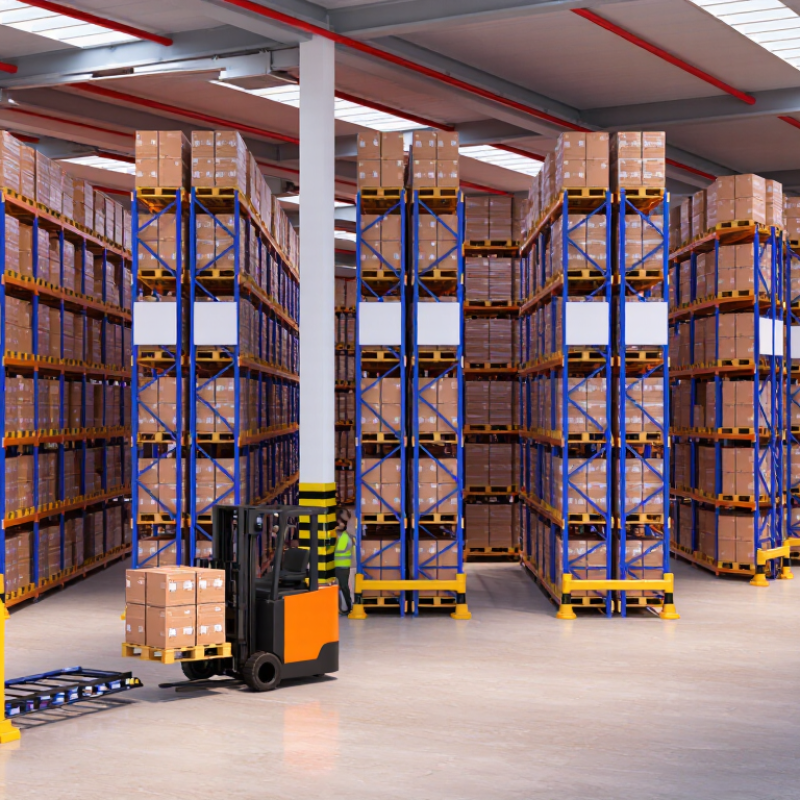
Push-back storage is a pallet racking system designed for high-density warehousing. Each lane holds several pallets from the same stock-keeping unit. Inclined rails or carts support the pallets, while gravity helps move them toward the loading position.
A forklift places the first pallet on the cart and pushes it backward. The next pallet enters the space created behind it. When operators remove the front pallet, the stored pallets roll forward under controlled movement. This process reduces aisle travel and keeps loading activity on one side of the rack. It usually follows a last-in, first-out pattern, so inventory rotation needs careful planning.
In global warehouses, this design can improve space use when floor area is expensive or limited. It suits products with moderate turnover and several pallets per item. However, it is not a universal answer. Fast-moving goods may need easier access, while mixed products can create retrieval mistakes. Warehouse teams should check pallet quality, load weight, lane depth, forklift dimensions, and fire-safety requirements before installation.
In practice, small differences matter. Damaged pallets may not move smoothly. Uneven loading can increase friction. Operators also need clear training and visible lane labels. A trial lane with real pallets often reveals problems that drawings miss. That extra test may feel slow, but it can prevent costly adjustments later.
Push-back storage uses nested carts on inclined rails. A forklift places a pallet from the front, pushing previously stored pallets deeper into the lane. Typical lanes hold approximately 2–6 pallets deep, offering higher density than selective pallet racking while preserving access to every lane from a single aisle. Because loading and unloading occur from the same side, the system is generally suited to last-in, first-out inventory rotation.
The ranges shown are typical industry configurations and vary by pallet size, rack height, load weight, building layout, and operational requirements.
Why Choose Push-Back Storage for Global Warehousing?
Global warehouses use push-back storage because it combines high density with practical loading speed. Each lane can hold multiple pallets, reducing unused aisle space in expensive facilities. The system works well for medium-turnover products with several pallets per stock-keeping unit. Operators load and retrieve pallets from one aisle, while carts or nested rails move stored pallets backward. Not every site should use it.
The 2024 Annual Industry Report by the Material Handling Institute found that 55% of supply-chain leaders planned to increase technology investment within two years. Push-back storage is not fully automated, but it supports that shift through better space utilization and simpler handling routines. In a regional warehouse, this can reduce travel around dense pallet blocks. It may also help teams manage seasonal inventory without constantly rebuilding locations.
Warehouse assessments show one recurring mistake: choosing push-back without checking product rotation. It follows a last-in, first-out pattern, which may conflict with date-sensitive goods. Rack depth, pallet quality, load weight, temperature, and local fire codes also require review. The 2024 WERC DC Measures Report highlights the value of measuring space, labor, and throughput together rather than separately. That approach is more reliable. Still, global facilities face different labor skills and building limits. A design that performs well in one country may need different lane depths, safety barriers, or inspection routines elsewhere. The system saves space, but only when operating discipline remains strong.
| Evaluation Dimension | Typical Push-Back Storage Profile | Operational Value for Global Warehouses | Important Planning Consideration |
|---|---|---|---|
| Storage method | High-density, lane-based pallet storage using nested carts or inclined rails | Uses depth rather than additional aisle space, helping warehouses increase pallet positions within the same footprint | The storage structure, carts, rails, and pallets must be selected as one integrated system |
| Typical lane depth | Commonly designed for approximately 2–6 pallets deep per lane; deeper layouts are possible in specialized applications | Provides more storage positions per aisle than single-deep selective rack layouts | Actual depth depends on pallet dimensions, load weight, forklift reach, building height, and inventory turnover |
| Storage density | Generally higher than selective pallet racking because fewer access aisles are required | Useful where land, building area, or temperature-controlled space is expensive | Higher density may reduce direct access to individual pallets within the same lane |
| Pallet accessibility | Direct access is normally available from the aisle to the front pallet of each lane | Supports organized storage of products grouped by SKU, batch, market, or shipping destination | It is not a fully selective system; each lane should generally be assigned to compatible inventory |
| Inventory rotation | Primarily follows the last-in, first-out (LIFO) principle | Works well for non-perishable goods and products managed by production lot or shipment batch | For strict first-in, first-out (FIFO) requirements, drive-through or pallet-flow solutions may be more suitable |
| Best inventory profile | Medium-to-high quantities of relatively stable SKUs, with multiple pallets stored per SKU or product group | Reduces the number of separate lanes needed for high-volume items | Less effective for warehouses with many low-volume SKUs requiring one-pallet-per-item access |
| Space utilization | Can improve cubic utilization by combining vertical rack levels with deep storage lanes | Helps maximize available warehouse volume in urban, export, and cold-storage facilities | Clear height, sprinkler requirements, fire codes, seismic conditions, and aisle width must be verified locally |
| Loading and unloading | Forklift places a new pallet at the front and pushes previously stored pallets deeper into the lane | Enables loading and retrieval from the same aisle without a dedicated rear access aisle | Operators need consistent pallet placement and controlled travel speeds to protect loads and equipment |
| Forklift requirements | Usually compatible with standard counterbalance or reach-truck operations, subject to rack and aisle design | Allows many existing warehouse operations to adopt the system without fully changing material-handling methods | The selected truck must have adequate capacity, lift height, reach, visibility, and aisle maneuverability |
| Labor efficiency | Reduces travel associated with accessing deep pallet positions compared with separate single-deep locations | Can support faster replenishment and dispatch for full-pallet operations | Productivity depends on lane assignment, slotting discipline, congestion, and operator training |
| Scalability | Can be expanded by adding rack bays, levels, or lanes when the building structure allows | Supports phased capacity growth across regional distribution and international supply-chain facilities | Future expansion should be included in the original structural, fire-protection, and aisle-layout plans |
| Maintenance profile | Requires routine inspection of frames, beams, rails, carts, wheel assemblies, and load-contact areas | A relatively simple mechanical design can support predictable preventive-maintenance programs | Damaged components should be isolated and repaired or replaced according to local safety standards |
| Most suitable applications | Food and beverage, packaged goods, manufacturing components, import/export staging, and temperature-controlled storage | Combines high storage density with practical full-pallet handling for repeatable product flows | A detailed analysis should compare push-back with selective, drive-in, pallet-flow, and automated storage systems before final selection |
Note: Performance ranges and suitability depend on pallet dimensions, load characteristics, building geometry, equipment specifications, local regulations, and warehouse operating procedures.
Push-back racking can improve space utilization by storing several pallets deep in one lane. This design reduces unused aisle space and increases pallet positions within the same warehouse footprint. Operators load new pallets from the front, while each pallet moves backward on wheeled carts or rails. When stock is removed, gravity brings the next pallet forward. The system supports dense storage without requiring forklifts to enter every lane. That can reduce travel time and make daily handling more predictable.
Space efficiency depends on accurate planning. A warehouse should measure pallet dimensions, load weights, aisle widths, and product turnover before installation. Push-back storage usually suits last-in, first-out inventory flow. It may not suit products requiring strict first-in, first-out rotation. That limitation deserves attention. Poor product grouping can also create hidden congestion. Regular inspections help identify damaged rails, uneven loading, or unsafe pallet positions before problems grow.
Tips: Keep similar products in clearly labeled lanes. Use location data to monitor aging inventory. Train operators to load pallets evenly and slowly. Leave enough clearance for turning forklifts. Review space gains after several months, not only after installation. A practical audit may show that some lanes need adjustment. That is normal. Warehousing changes with demand, packaging, and regional shipping patterns. Flexible slotting keeps the system useful across different facilities.
Push-back storage gives warehouse teams denser pallet access without adding long travel routes. Each lane holds products behind one another, using gravity rollers to move pallets toward the operator. That movement reduces forklift crossings and keeps replenishment work more predictable. In a busy global facility, predictable motion matters. Workers can identify the front pallet quickly, scan its label, and remove stock with fewer pauses. This setup suits reserve inventory, seasonal goods, and products with similar packaging.
Operational gains appear in small moments. A driver may spend less time reversing, waiting, or searching for an open location. The next pallet then reaches the picking face with limited handling. Fewer touches can reduce product damage and improve inventory accuracy, provided loading rules are followed. Teams should set lane limits, label each channel clearly, and inspect rollers regularly. A simple location audit can reveal aging stock before retrieval becomes difficult. These controls support reliable stock rotation when the lane design matches the product profile.
For workforce efficiency, push-back storage can shorten training for routine pallet movements. The operating pattern is clear: load from one side, pick from the same side. However, it is not a universal solution. Deep lanes can hide older inventory, and heavy pallets demand careful speed control. I have seen layouts promise high density but create congestion near staging areas. That weakness deserves measurement, not optimism. Managers should compare travel time, replenishment frequency, damage records, and retrieval errors before expanding the system. A practical trial with real operators often exposes issues that a drawing misses.
Push-back storage can increase pallet density while reducing unnecessary aisle space. When selecting a system, confirm the pallet sizes, weights, and loading patterns used at each site. Rack depth matters because deeper lanes improve capacity but may slow product access. Heavy pallets need suitable rails, frames, and braking controls. Do not estimate. Use verified load data and professional calculations.
I have seen warehouses lose efficiency because storage equipment matched the building, but not the operation. A facility with frequent product changes may need shorter lanes and clearer location labels. Push-back systems usually support last-in, first-out handling. They may not suit goods requiring strict first-in, first-out rotation. Operators also need practical training, especially when forklifts place pallets at upper levels. Small errors can damage rails or create unstable loads.
Reliability depends on more than the rack structure. Ask for inspection procedures, installation records, and maintenance guidance. Request a layout showing travel paths, emergency access, and fire protection clearance. Local building and safety requirements can differ across countries, so qualified engineers should review each installation. Temperature, humidity, and floor conditions also deserve attention. One overlooked detail is future growth. Leave room for changing pallet dimensions and seasonal inventory. No solution is perfect. A pilot lane may reveal handling problems before a full investment.
It stores several pallets deep in one lane. This reduces unused aisle space and increases pallet positions. Forklifts usually load from the front.
New pallets push earlier pallets backward on carts or rails. When stock is removed, gravity moves the next pallet forward. The process limits forklift travel inside lanes.
It usually suits last-in, first-out inventory. It may not suit products requiring strict first-in, first-out rotation. That limitation matters.
Measure pallet dimensions, load weights, aisle widths, and product turnover. Check floor conditions, temperature, humidity, and available clearance. Do not estimate.
Deeper lanes can increase capacity but may slow product access. Shorter lanes may work better for frequently changing products. The ideal depth depends on demand patterns.
Operators should load pallets evenly and slowly. They need training for upper-level loading and forklift turning. Regularly inspect rails, frames, braking controls, and pallet positions.
Keep similar products in clearly labeled lanes. Use location data to monitor aging stock. Review travel paths and adjust slotting when demand changes.
Request installation records, inspection procedures, maintenance guidance, and a detailed layout. Include emergency access and fire protection clearance. Local requirements may differ.
Yes, a pilot lane can reveal handling problems and clearance issues. It may expose weak assumptions. No solution is perfect.
Review space gains after several months, not immediately. Compare pallet capacity, travel time, access speed, and damaged components. Some lane adjustments are normal.
Push-Back Storage is a high-density pallet racking solution designed to use warehouse depth more effectively while maintaining organized and accessible inventory. In this system, pallets are placed on nested carts or rollers and pushed toward the back of a storage lane as new pallets are loaded. When goods are retrieved, the front pallet is removed and the pallets behind it move forward, supporting a practical last-in, first-out inventory flow. This design is especially useful for global warehouses managing large quantities of similar products and limited floor space.
By increasing vertical and horizontal storage capacity, Push-Back Storage can reduce unused aisles and improve space utilization without significantly expanding a facility. It may also streamline pallet handling, reduce travel distances, and support more efficient workforce operations. When selecting a solution, warehouse managers should evaluate load capacity, pallet dimensions, lane depth, product turnover, equipment compatibility, safety requirements, and future growth. A well-planned system can provide flexibility, reliable access, and consistent performance across changing storage demands.

Xinmiao Racking