Choosing among the best Stacking Systems in China starts with understanding what a warehouse actually needs. A high-density rack may look impressive, but it can slow picking when workers access fast-moving goods every hour. The right choice depends on product size, pallet loads, stock rotation, ceiling height, and available floor space. Small details matter.
This guide introduces common options, including selective pallet racking, drive-in racks, shuttle systems, and automated storage solutions. Each handles space and access differently. Selective racks offer direct access to individual pallets, while drive-in designs prioritize storage density. Shuttle and automated systems can reduce manual travel, but they require compatible equipment, careful planning, and reliable technical support. No single option wins everywhere.
A sound comparison should examine load ratings, material quality, installation standards, maintenance needs, and the supplier’s service record. Ask for drawings, safety documentation, and references from facilities with similar products and workflows. Local building conditions and applicable safety requirements also deserve attention; confirm them with qualified professionals before installation. That step is easy to overlook.
There is a practical uncertainty, too. Published specifications cannot fully predict daily performance in a busy warehouse. A site assessment, sample workflow, or pilot area may reveal awkward turning space or replenishment delays before a full purchase. The aim is not simply to store more. It is to select a system that fits real operations, remains safe under expected loads, and can adapt as inventory changes.
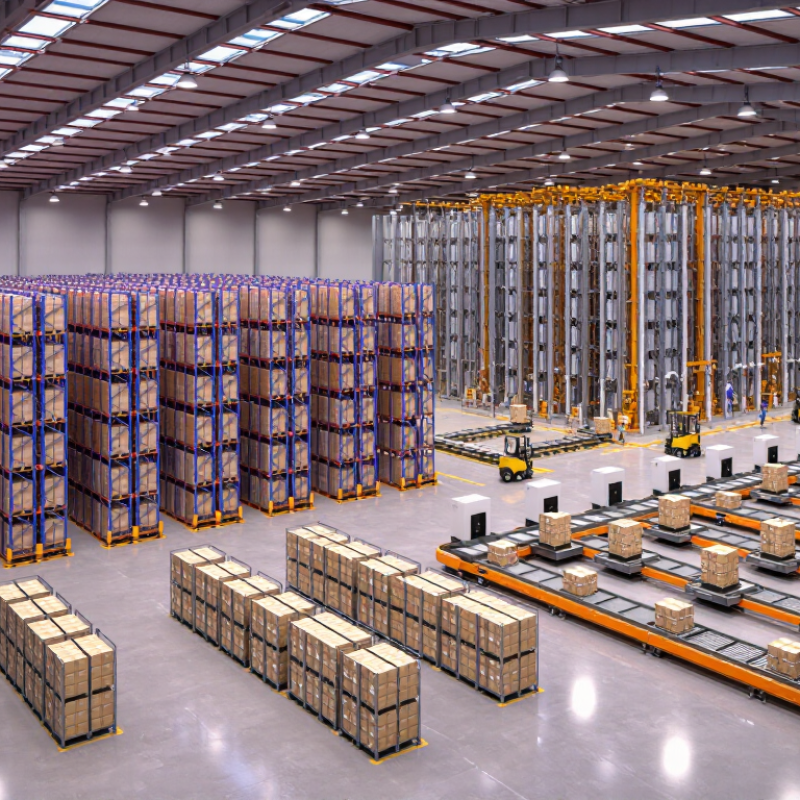
A stacking system is the way a warehouse stores goods vertically and moves them safely. In China, a facility might use floor stacking for uniform cartons, pallet racks for mixed loads, or automated equipment in a high-throughput operation. The right choice depends on the goods, building height, floor strength, and how often workers need access.
Space is never free.
In a pallet-rack setup, a forklift places each pallet on a beam at a planned level. Clear labels and load limits help prevent overloading, while marked aisles reduce collisions. Automated systems use sensors, lifts, and control software to bring stored items to a picking point. They can save travel time, but need reliable maintenance and trained staff.
Real sites vary. Damp packaging, uneven pallets, or changing inventory can disrupt a tidy plan. I would not treat a clean layout drawing as proof that the system will work well every day. Managers should check clearances, inspect damaged beams, and test how replenishment and picking overlap during busy shifts.
A simple manual arrangement may be safer and easier to adjust than automation when volumes are modest. The best system is the one workers can operate consistently, not merely the one that fits the most pallets.
China’s warehouses use several stacking systems, chosen according to pallet size, stock turnover, ceiling height, and handling equipment. Selective pallet racking gives workers direct access to each pallet, making it practical for mixed stock and frequent picking. It uses more aisle space. The word “best” can mislead: a layout that suits a high-volume food warehouse may frustrate a parts operation.
Drive-in and drive-through racks store pallets in deep lanes, so they suit large batches of similar goods. Drive-in layouts generally support last-in, first-out handling; drive-through designs can support first-in, first-out when loading and unloading happen at opposite ends.
Double-deep racks increase storage density but need compatible reach equipment. Pallet-flow racks use rollers to move loads toward the picking face. Fast movement. Load quality matters.
Push-back systems hold several pallets per lane, while shuttle-assisted designs reduce forklift travel inside deep lanes. Automated high-bay systems combine racks, cranes, conveyors, and software; they can use space efficiently but require careful integration and maintenance. Mezzanine-supported shelving adds picking levels for cartons, not just pallets.
Before selecting a system, check floor loading, fire protection, pallet dimensions, and peak-hour throughput with a qualified warehouse engineer. A site survey may change the answer.
A high-quality stacking system starts with a clear load rating. Each beam and upright should match the weight, size, and shape of the goods stored. In a busy warehouse, uneven pallets can shift pressure onto one side. That detail is easy to overlook. Look for visible capacity labels and installation records, not just a strong-looking frame.
Stability matters as much as capacity. Check the floor condition, anchoring method, and available clearance for handling equipment. In regions exposed to humidity or temperature changes, protective finishes can help limit corrosion. For taller installations, ask how the design accounts for local conditions and relevant engineering requirements. Small details count. A bent connector or loose bolt can become a larger problem if inspections are irregular.
Good systems also support safe, practical workflows. Aisles should allow equipment to turn without scraping uprights, while clear access helps staff identify and retrieve items. Modular parts can make later changes easier, but only when new configurations stay within approved load limits. Maintenance guidance should be simple enough to follow during routine checks. One imperfect point: even a well-designed system cannot compensate for rushed loading or poor staff training. Regular inspections, documented repairs, and honest reporting of minor damage help keep performance dependable.
| System Type | Storage Density | Pallet Access | Typical Inventory Flow | Suitable Applications | Key Design Consideration |
|---|---|---|---|---|---|
| Selective Pallet Racking | Low to moderate; aisle space is needed between rack rows. | Direct access to each pallet position. | Flexible; supports FIFO or LIFO depending on warehouse operations. | Warehouses with many product lines, varied pallet types, or frequent picking. | Balance aisle width and lift-truck requirements against the need for direct access. |
| Double-Deep Racking | Moderate to high; stores pallets two positions deep. | Front pallets are directly accessible; rear pallets require moving the front pallet first. | Generally LIFO within each lane; suitable where several pallets share a product. | Operations seeking more storage density while retaining access to multiple product lines. | Requires suitable reach equipment and inventory planning for the less accessible rear positions. |
| Drive-In Racking | High; reduces the number of aisles by storing pallets in deep lanes. | Limited; a lift truck enters the lane to place or retrieve pallets. | Typically LIFO, with loading and retrieval from the same end. | Large quantities of the same product with relatively low pallet turnover. | Lane depth, pallet consistency, and truck operating clearances are important to safe use. |
| Drive-Through Racking | High; pallets are stored in deep lanes accessible from both ends. | Access is through either end of a lane, rather than to every pallet position individually. | Can support FIFO when loading and retrieval are managed from opposite ends. | Bulk storage where product rotation is important and batches can be managed by lane. | Requires access aisles at both ends and disciplined loading and retrieval procedures. |
| Push-Back Racking | High; several pallets are stored deep on inclined carts or rails. | Front pallet is directly accessible; rear pallets move forward as pallets are removed. | Typically LIFO within each lane. | Medium-turnover products stored in multiple pallets per product or batch. | Confirm pallet dimensions, load compatibility, and operating procedures for the moving carts. |
| Pallet Flow Racking | High; gravity rollers allow deep storage lanes with fewer aisles. | Loading and picking take place at opposite ends of each lane. | FIFO by design when loaded from the replenishment end and picked from the other end. | High-turnover stock, date-sensitive goods, and operations requiring clear stock rotation. | Roller configuration, pallet quality, lane maintenance, and controlled loading affect performance. |
| Automated Storage and Retrieval System (AS/RS) | Potentially high; system layout can use tall structures and narrow aisles. | Automated access is controlled by the system and its storage configuration. | FIFO or LIFO can be configured according to system design and operating rules. | High-volume operations seeking automated storage, retrieval, and inventory tracking. | Assess building conditions, load units, throughput needs, controls integration, and maintenance capability. |
Comparing Chinese stacking system providers starts with the same operating brief: pallet dimensions, unit weight, daily movements, forklift type, and available ceiling height. Ask each supplier to state beam capacity and total bay capacity separately. Request the steel grade, component dimensions, finish thickness, and engineering drawings. “Heavy duty” is not a measurable specification. Ask for evidence.
Check whether the proposed layout fits your actual warehouse, not just a clean drawing. Measure aisle widths, column positions, sprinkler clearances, and floor conditions. Request load calculations and installation tolerances, then compare what each quotation includes. A lower price may omit guards, anchors, or commissioning. It is easy to miss these details. Ask how replacement parts are identified and stocked, and what response time service teams can offer. References from facilities with similar loads and equipment are useful, but verify the details directly. I would not rely on a polished brochure alone. Even a detailed comparison leaves some uncertainty, so record assumptions and clarify them before production.
Choosing a stacking system in China starts with the operating pattern, not the tallest rack. Selective pallet racking suits varied SKUs and frequent access. Drive-in or shuttle systems can increase density when products move in larger, predictable batches. For high throughput, automated stacker cranes may help, but only when order profiles and maintenance capacity justify the investment. That sounds simple. It rarely is.
MHI’s 2024 Annual Industry Report, based on a survey of more than 1,000 supply chain professionals, found that 55% planned to increase investment in supply chain technology and innovation. The figure signals growing interest, not a guarantee of payback. Measure peak pallets per hour, SKU turnover, load dimensions, and seasonal swings before selecting equipment. Check floor flatness, clear height, fire protection, and safe operating clearances with qualified local engineers. Then test the design against real picking routes and replenishment traffic.
Implementation should begin with a small, representative zone. Record travel time, damage, and replenishment delays before and after installation. Confirm that warehouse software can exchange inventory and equipment status reliably. Train operators on daily inspections and load limits. One uncomfortable truth: a dense layout can look impressive on a drawing and still slow workers down. Revise it when site measurements disagree with the plan.
Selective pallet racking gives workers direct access to each pallet. It uses more aisle space. Convenient, but not compact.
They suit large batches of similar goods stored in deep lanes. Drive-in layouts generally use last-in, first-out handling. Drive-through designs can support first-in, first-out when loading and unloading happen at opposite ends.
Yes. They store pallets deeper and can reduce aisle space. They require compatible reach equipment, so check access carefully.
Rollers move pallet-flow loads toward the picking face. Push-back systems hold several pallets in each lane. Load quality matters.
Automated high-bay systems combine racks, cranes, conveyors, and software. They may use space efficiently, but need careful integration and maintenance. More machinery is not automatically better.
It adds picking levels for cartons, not just pallets. Check that the structure and access suit the items handled.
Measure peak pallets per hour, SKU turnover, load dimensions, and seasonal swings. Also check floor flatness, clear height, fire protection, and operating clearances. Small details matter.
Start with a representative zone. Record travel time, damage, and replenishment delays before and after installation. Real routes may expose flaws.
Confirm that software reliably exchanges inventory and equipment status. Train operators on daily inspections and load limits. Plans can be wrong. Revise them when site measurements disagree.
Stacking Systems are designed to organize and move materials efficiently by placing goods in stable, accessible arrangements. In China, common options include manual, semi-automatic, and fully automated systems, as well as solutions tailored to specific loads, facility layouts, and workflow requirements. The right choice depends on how materials are handled, how much capacity is needed, and how the system will fit into existing operations.
A high-quality system should offer reliable performance, stable construction, appropriate safety features, and straightforward maintenance. When comparing providers, assess technical specifications, customization, installation support, training, and long-term service—not just the initial price. Before implementation, define operational goals, evaluate the site and material requirements, and plan for staff training and regular inspections. A careful selection process can help improve space utilization, streamline handling, and support dependable day-to-day operations.

Xinmiao Racking