Top Impact Racks for Warehouse Safety and Durability

Time:2026-11-06 Author:Henry
0%

Impact Racks are often treated as a final layer of protection. In a busy warehouse, they are part of a larger safety system: rack design, load limits, forklift routes, inspections, and staff training. The risks are tangible. A bent upright near a loading aisle, a loose anchor, or a pallet extending beyond its beam can turn a routine turn into costly damage. The U.S. Bureau of Labor Statistics’ 2023 Survey of Occupational Injuries and Illnesses reported 4.8 recordable cases per 100 full-time workers in warehousing and storage. That figure does not isolate rack impacts, but it underscores why prevention deserves attention.

OSHA’s material-handling rule states, “Storage of material shall not create a hazard.” For rack protection, that means choosing guards suited to the actual traffic and layout—not simply installing the largest barrier available. Impact Racks should be positioned to shield vulnerable uprights and end frames while keeping aisles usable. Anchor condition, impact marks, and clearance around turning points matter, too. Small details count.

This guide compares leading Impact Racks for warehouse safety and durability, with attention to materials, installation, visibility, and maintenance. It also considers a practical limitation: guards can reduce collision damage, but they cannot correct poor loading practices or replace inspections. That distinction is easy to overlook. A safer rack begins with an honest assessment of daily operations, then a protection plan matched to the site.
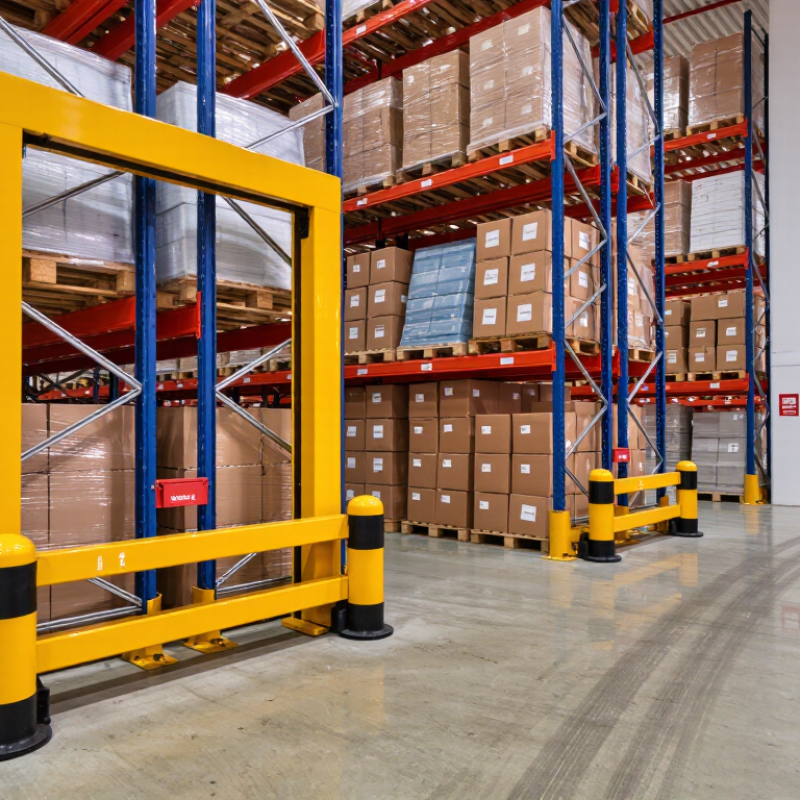
Top Impact Racks for Warehouse Safety and Durability

What Impact Racks Are and How They Protect Warehouse Storage

Impact racks are storage systems fitted with protective components around vulnerable uprights and aisle ends. These guards are usually made from shaped steel or durable polymer. Their job is to take or redirect limited contact from forklifts and pallet trucks before a rack column is struck directly.

A small collision can bend an upright, loosen a connection, or shift stored goods. The damage may not look serious from the aisle. That is the tricky part. A guard can reduce the chance of direct impact, but it cannot make a rack collision-proof or replace sound installation. Loads still need to stay within the rack’s rated capacity, and guards must not obstruct safe forklift movement.

In a working warehouse, protection should match the traffic pattern. End-of-aisle guards help where trucks turn tightly; column guards suit exposed uprights near picking lanes. Leave enough clearance for pallets, forks, and turning movements. After a strike, inspect the guard, its anchors, and the rack behind it. Replace damaged parts according to the rack system’s specifications. Even a shallow dent deserves a closer look. Teams sometimes overlook that.

Core Components and How Impact Racks Absorb Collisions

An impact rack relies on a connected load path, not one “tough” part. Upright frames carry vertical loads; beams and locking connectors hold pallet levels. Baseplates and anchors transfer forces into the floor. At aisle ends, guards or column protectors take the first strike. Some are designed to deform or deflect, limiting direct contact with the rack. They do not make the rack collision-proof.

The U.S. Bureau of Labor Statistics reported a 4.8 total recordable case rate per 100 full-time workers in warehousing and storage for 2022. This figure covers all recordable workplace injuries and illnesses, not rack collisions alone. It still underscores why routine checks matter. Inspect for bent uprights, cracked welds, loose anchors, and beam connectors that no longer seat fully. ANSI MH16.1 provides engineering requirements for industrial steel storage racks; repairs should follow qualified guidance. A small dent can be easy to dismiss. That judgment deserves a second look.

Tips: Match guards to the likely impact points, such as aisle ends and exposed columns. Keep floor anchors visible during inspections, and record each strike. Replace damaged protective parts promptly; adding an improvised brace may change how forces reach the rack.

Safety Benefits of Impact Racks in Warehouse Operations

In warehouse operations, rack protection is a safety control, not decoration. A forklift clipping a lower upright can bend steel, disturb stored loads, and create hazards beyond the original aisle.

OSHA estimates that powered industrial truck incidents cause about 85 fatalities and 34,900 serious injuries each year in the United States. Those figures cover many kinds of incidents, not rack collisions alone, but they show why impact prevention deserves attention. OSHA’s Powered Industrial Trucks eTool also stresses training and safe equipment use. Racks need protection too.

Well-positioned column guards and end-of-aisle barriers can help intercept low-speed contact before it damages a rack upright. They must suit the truck paths, load dimensions, and rack layout; a guard that narrows a turning aisle may create another hazard.

Look for fresh paint scrapes, bent bracing, loose anchors, or leaning loads during routine checks. Small clues matter. Rack Manufacturers Institute guidance supports prompt reporting and assessment of visible rack damage.

A damaged component should not be treated as harmless just because it still holds a pallet. Impact protection reduces exposure, but it cannot make a collision safe.

Honestly, even a bright guard can be missed during a rushed shift. Periodic layout reviews and worker feedback help reveal those weak spots.

Materials and Design Features That Improve Rack Durability

Durable warehouse racking starts with the right steel for the expected load and handling conditions. Uprights made from appropriately sized structural steel resist bending, while well-formed beams help distribute weight across each bay. Thickness alone is not enough; weld quality, connection fit, and rated capacity matter too. Check that load information is clear and matches the installed configuration.

Surface protection also affects service life. A tough powder-coated finish can limit scratches and corrosion, especially near damp loading areas. Yet a thick coating can hide trouble. Inspect for chipped paint, rust at joints, and bent column edges. Small details count. Anchors should fit the floor and remain tight, while base plates need full, stable contact. Where forklifts operate, column guards can absorb some contact and help prevent costly damage, but they do not make impacts harmless.

Design features should make wear easy to spot and repairs practical. Replaceable beam connectors and accessible fasteners can simplify maintenance when parts are damaged. Keep aisles wide enough for turning, and avoid placing vulnerable rack ends directly in busy travel paths. Even careful layouts cannot prevent every bump. That is an uncomfortable truth. Regular walk-throughs, prompt reporting, and documented repairs help catch problems before a minor dent becomes a structural concern.

Top Impact Racks for Warehouse Safety and Durability — Materials and Design Features That Improve Rack Durability

Rack Component Common Material Durability-Oriented Design Safety and Durability Benefit Inspection and Maintenance Focus
Upright frames Formed or rolled structural steel Braced vertical columns with a durable, protective finish; frame capacity is selected for the specified load and configuration. Bracing helps resist sideways movement, while correctly rated frames support stable pallet storage. Check columns and braces for bends, cracks, loose connections, corrosion, and impact damage.
Load beams Structural steel, commonly formed into closed or box-like sections Beam connectors engage with upright slots or connectors and are secured with locking devices where specified. Properly matched beams and connectors help keep loads supported and reduce the risk of accidental beam disengagement. Look for beam deflection, damaged connectors, missing locks, and loads that exceed posted capacity.
Base plates and floor anchors Steel base plates with mechanical or chemical concrete anchors selected for the installation Anchors are installed to suit the rack design, floor condition, and applicable engineering requirements. Anchoring helps restrain the rack at its base; sound concrete and correct installation are essential to performance. Check for loose or missing anchors, cracked concrete, damaged base plates, and signs of movement.
Upright protectors Formed steel or impact-absorbing polymer Protectors are positioned at exposed upright legs and secured according to their design; they should not obstruct inspections. They can help reduce direct contact between material-handling equipment and rack uprights, but do not make the rack impact-proof. Replace protectors that are split, deformed, detached, or no longer positioned to guard the upright.
End-of-aisle guards Steel guard posts, rails, or engineered barrier assemblies Barrier placement and anchoring are planned to protect aisle ends and turning areas without interfering with traffic routes. Separating vehicle paths from rack frames can reduce the likelihood and severity of end-frame impacts. Inspect barrier alignment, anchor points, welds, and impact damage; repair or replace damaged sections.
Diagonal and horizontal bracing Steel braces connected to upright columns Braces form a rigid frame pattern and are kept clear of modifications or obstructions that could compromise connections. Bracing contributes to frame stability and helps transfer forces through the rack structure. Check for missing, bent, cracked, or loose braces and damaged connection points.
Beam locks and connectors Steel locking pins or integrated mechanical connectors Positive-retention features are fitted as specified for the beam and upright system. Retention devices help prevent a beam from being unintentionally lifted out of its connection during handling. Confirm locks are present, correctly seated, and undamaged after rack impacts or alterations.
Decking and pallet supports Steel wire mesh, steel panels, or dedicated pallet-support bars Supports are sized and positioned for the pallet type, load, and beam spacing; decking is secured where required. Appropriate supports help distribute loads and reduce the chance of pallets slipping through rack levels. Check for displaced or damaged decking, unsupported pallet edges, and loads that do not fit the intended layout.
Surface protection Paint, powder coating, or zinc-based coating, depending on the environment Coating choice accounts for exposure to moisture, abrasion, and cleaning conditions. A suitable coating can slow corrosion and preserve the steel surface; it does not restore structural capacity after damage. Monitor for coating loss, rust, and corrosion around joints, floor-level areas, and damaged sections.

Rack capacity and component compatibility depend on the specific system, layout, installation, and loading conditions. Follow the rack supplier’s specifications and applicable local safety requirements; have impact damage assessed before the affected area is returned to service.

How to Select, Inspect, and Maintain Impact Racks

Selecting impact racks starts with the traffic they face. Map forklift routes, turning points, aisle widths, and the loads stored nearby. Compare rack capacity and impact-protection ratings with documented operating conditions, not estimates. Confirm that guards fit the rack design and do not block access to anchors or aisles. Small details matter.

Inspect uprights, beams, braces, base plates, anchors, and beam locks on a set schedule. Look for bends, cracks, loose fasteners, shifted footplates, and fresh scrapes. Check whether frames remain plumb; a small lean can signal a larger problem. Do not guess. After a collision, restrict access to the affected bay and follow your site’s procedure for unloading and assessment by a qualified person. Never assume a dent is harmless, or attempt an improvised repair.

Keep a simple record of inspection dates, damage locations, photographs, and corrective actions. Clear debris around rack bases, and check anchors after floor work or nearby impacts. Review damage patterns with forklift operators; repeated marks may point to a route or visibility issue. A guard can reduce direct contact, but it cannot prevent every failure. Maintenance plans also need revision as loads, equipment, or warehouse layouts change.

Warehouse Rack Impact: Speed vs. Kinetic Energy

Even a small increase in forklift speed can substantially increase the energy involved in a potential rack collision.

Illustrative calculation using kinetic energy = ½ × mass × speed² and a 1,500 kg moving mass. Values are rounded to the nearest joule; this is not a rack capacity rating or a damage threshold. Actual damage depends on factors including impact location, rack design, and load conditions.

FAQS

How does an impact rack handle a collision?

Its connected structure carries forces from the rack to the floor. Guards may take the first strike, but the rack is not collision-proof.

Which parts help transfer loads and forces?

Uprights carry vertical loads. Beams and connectors support pallet levels, while baseplates and anchors transfer forces into the floor.

Where should protective guards be placed?

Protect likely contact points, such as aisle ends and exposed columns. Check that guards do not make turning paths too narrow.

What signs of damage should workers look for?

Check for bent uprights, cracked welds, loose anchors, and connectors that do not seat fully. Look for fresh scrapes, too.

Does a rack remain safe if it still holds a pallet?

Not necessarily. A damaged part may hide a larger problem, even when the pallet appears stable.

What should happen after a rack is struck?

Record the strike and arrange a qualified assessment. Replace damaged protective parts promptly; improvised braces can redirect forces.

How often should rack protection and layouts be reviewed?

Include them in routine checks and periodic layout reviews. Worker feedback can reveal risky turns or guards that are often missed.

Do impact guards prevent every collision hazard?

No. They can reduce direct contact, but they cannot make a collision safe. A bright guard can still be missed during a rushed shift.

Conclusion

Impact Racks are designed to protect warehouse storage systems from collisions involving forklifts and other moving equipment. Positioned at vulnerable areas, they help absorb and distribute impact forces, reducing the risk of damage to rack uprights, stored goods, and nearby work zones. Their key components work together to manage collisions while supporting safer, more orderly warehouse operations.

Durability depends on suitable materials, robust construction, and design features that match the demands of the facility. Selecting the right Impact Racks requires considering traffic patterns, equipment, and areas most exposed to contact. Regular inspections can identify signs of wear, deformation, or loose connections, while timely maintenance helps keep the protective system effective. With thoughtful selection and consistent care, Impact Racks can contribute to safer operations and longer-lasting storage infrastructure.

Henry

Henry

Henry is a dedicated marketing professional with a profound expertise in the company's offerings. With years of experience in the industry, he possesses an impressive understanding of the market dynamics and consumer behaviors that drive success. Henry is committed to sharing his insights through......