Boltless Systems are modular storage structures assembled without traditional nuts, bolts, or welding. They usually use upright frames, horizontal beams, and adjustable shelves. Each component locks into place through slots, clips, or rivet-style connections. The result is a practical system for warehouses, workshops, stockrooms, garages, and retail backrooms.
“Good storage is not only about capacity; it is about access, visibility, and control,” says warehouse operations consultant David J. Piasecki. This principle explains why Boltless Systems remain popular. Workers can often change shelf heights with hand tools, or without tools at all. A carton of fasteners may sit on a lower shelf. Labeled bins can occupy eye-level positions. Heavier equipment belongs near the floor.
The assembly process is simple, but not careless. Upright posts must stand evenly. Beams must lock completely. Shelves should suit the load, not merely fit the available space. Manufacturers normally provide rated capacities, and users should follow them closely. A shelf that looks stable may still fail under uneven weight.
Boltless Systems also reduce installation time and support future changes. A growing business can add levels, bays, or accessories instead of replacing the entire structure. That flexibility has limits. Very heavy, oversized, or impact-prone goods may require a specialized racking solution.
This is the part many basic explanations miss. Boltless does not mean risk-free. Proper inspection, accurate loading, and sensible placement still matter. The system works best when convenience is balanced with disciplined warehouse practice.
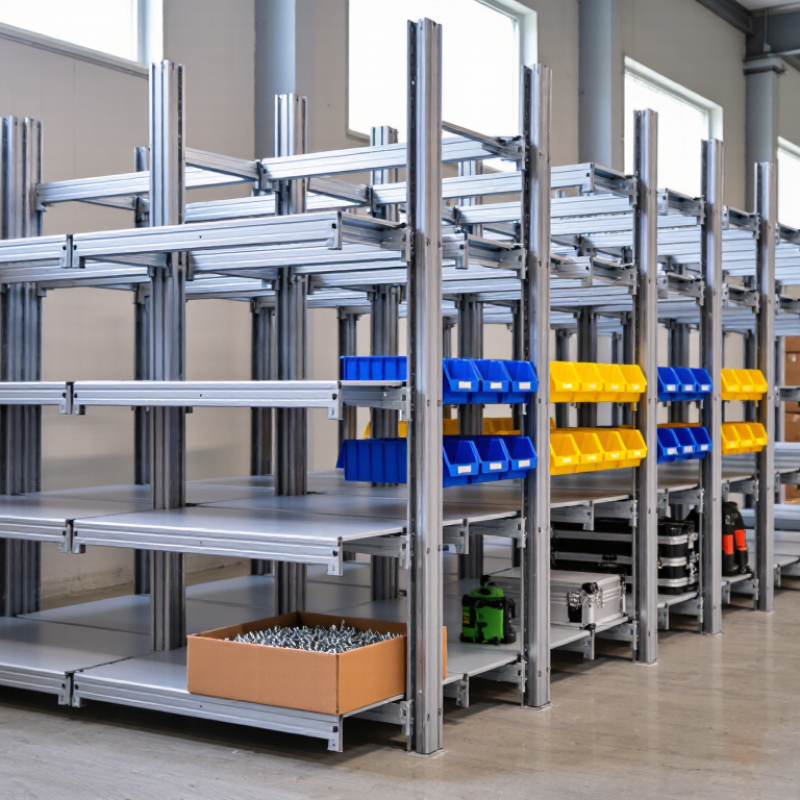
Boltless systems are modular structures assembled without conventional nuts and bolts. They commonly use upright frames, horizontal beams, locking tabs, and punched slots. Each beam fits into an upright and locks through a rivet, clip, or similar connector. The connection relies on careful alignment and the weight of the structure.
In storage shelving, workers usually place the uprights on a level floor. They insert the beams by hand and tap them gently with a rubber mallet. No drilling is normally required. No complex tools are needed.
Decking, such as steel panels or wood boards, then rests on the beams. Bracing may be added when the unit is tall or carries uneven loads.
The practical advantage is flexibility. Shelf heights can be changed as inventory grows or equipment moves. A small workshop may use one level for containers and another for long tools.
However, “boltless” does not mean maintenance-free. Loose connectors, damaged uprights, and overloaded shelves can reduce stability.
The term sounds simpler than the work actually is. Installers should inspect every joint, confirm the floor is suitable, and follow the stated load capacity.
In real use, uneven floors often create problems that are easy to overlook. A level check and a cautious first load can prevent expensive mistakes.
A boltless storage system is built from a few carefully matched components. Its main structure includes vertical uprights, horizontal beams, decking, connectors, and footplates. The uprights form the frame and transfer weight toward the floor. Each upright usually contains repeated slots for adjustable shelf heights. This simple pattern supports flexible storage layouts.
Horizontal beams connect the uprights and hold the shelf surface. Their tabs or hooks fit into the upright slots, creating a firm mechanical connection without traditional bolts. Decking fills the space between beams. Steel panels suit heavy loads, while wood-based boards provide a practical surface for cartons and containers. Some designs also include retaining pins, diagonal braces, or protective guards. These parts improve stability, especially on taller units.
Assembly usually needs basic hand tools, such as a rubber mallet. The frame should stand on a level, solid floor before loading. Uneven floors can distort the structure. Load labels must be checked for every shelf level, not guessed from appearance. They matter. In my experience, a shelf that looks strong may still fail under concentrated weight. The design is efficient, but not foolproof. Inspecting each connection after assembly can reveal a partly engaged tab or loose brace. That small check is easy to skip, yet it can affect the system’s reliability.
Boltless systems use interlocking steel parts instead of traditional nuts and bolts. Their assembly depends on shaped tabs, slots, and gravity-supported joints. In practical work, the floor matters more than many instructions suggest. A slightly uneven surface can make the entire unit lean.
Assembly starts with checking every upright, beam, connector, and shelf panel. Place the uprights on a clean, level floor. Insert the first beam into the lowest slots, then tap it gently with a rubber mallet. Do not strike the steel directly with hard tools. Add the opposite beam at the same height, creating the first frame. Repeat this process upward, keeping each level aligned. The tabs should sit fully inside their slots, with no visible gap.
Next, fit the shelf panels onto the supporting beams. Press each panel down and check for movement by hand. A stable connection should feel firm, not forced. This step is often rushed. That is a mistake. Add heavier items to lower levels and keep loads centered. Check the stated capacity for each shelf, because capacity can change with spacing and installation conditions. Tall units may also require wall anchoring, depending on the room, floor, and local safety requirements.
One practical lesson is simple: boltless does not always mean effortless.
Tools may still help.
Inspection matters more than speed.
If a frame rocks, stop and correct the base before loading it.
Boltless systems use interlocking beams, uprights, clips, or rivets instead of traditional threaded fasteners. Workers assemble them with simple hand tools, often in minutes. Their flexibility explains their growing use in warehouses, workshops, retail rooms, archives, and garages.
Common types include rivet shelving, clip-in shelving, modular wire shelving, and boltless pallet racks. Rivet shelving suits cartons, tools, and medium-weight inventory. Wire units improve airflow around food-service supplies, medical equipment, and damp-area materials. Pallet racks handle heavier loads, using adjustable beams for different pallet heights. Workbenches and partition frames also use similar connections.
The application depends on load, access frequency, floor conditions, and required height. A small workshop may need shallow shelves for labeled bins. A distribution facility may require wide bays and forklift clearance. The U.S. Census Bureau reported 2024 U.S. retail e-commerce sales of approximately $1.19 trillion, increasing pressure on storage operators to expand capacity quickly. Grand View Research also projects continued growth in the global warehouse racking market through 2030. These figures support demand, but they do not guarantee a suitable design.
Boltless does not mean maintenance-free. Loose clips, uneven floors, or overloaded levels can reduce stability. The distinction is not always clean. Operators should inspect connections, follow stated load ratings, and reassess layouts as inventory changes. In practice, the fastest installation may create the weakest arrangement if planning is rushed.
What Are Boltless Systems and How Do They Work?
Benefits and Limitations of Boltless Design
Boltless systems use interlocking tabs, slots, clips, or locking pins instead of traditional bolts. Uprights support horizontal beams through shaped connections. Installers usually tap each beam into place with a rubber mallet. This creates a firm frame without drilling or specialized power tools. Shelving, workbenches, and light storage platforms often use this design.
The main benefit is speed. A trained person can assemble many sections in a short session. Components are also easier to relocate when storage needs change. Fewer loose fasteners reduce small-part loss during installation. The open structure improves visibility and allows access from several sides. In practice, this flexibility helps workshops respond to changing inventory.
Boltless design still has limits. Capacity depends on beam size, connection quality, floor condition, and load distribution. Heavy items should sit low, with weight spread across the shelf. Uneven floors may twist the frame and weaken its stability. Some connections can loosen after repeated impacts or vibration. Regular inspections are necessary. Check bent parts, damaged locking points, and unexpected movement. Assembly is simpler, but not foolproof. I have seen users rush the final checks, then blame the system for poor setup. Clear load labels and careful installation matter more than convenience alone.
Boltless shelving uses rivets, keyhole slots, clips, or locking tabs instead of traditional nuts and bolts. The chart shows representative safe working-load averages for common beam spans. Shorter spans generally support higher loads, while longer spans require stronger beams or additional support. Actual capacity depends on the steel thickness, beam profile, upright design, installation quality, and load distribution.
It is a modular frame using uprights, beams, slots, and locking connectors. No conventional nuts or bolts are normally required.
Place the uprights on a level floor. Insert each beam into the matching slots, then tap it gently with a rubber mallet.
Usually, no complex tools are necessary. A rubber mallet and a level are often enough for basic assembly.
Yes, beams can usually be moved to different slots. This helps when containers, tools, or equipment change size.
Steel panels or wood boards can rest across the beams. The decking should fit securely and support the intended load.
No. Inspect connectors, uprights, and locking points regularly. Small damage can become a stability problem.
Put heavier items on lower shelves. Spread the weight evenly instead of concentrating it in one corner.
An uneven floor can twist the frame and reduce stability. Check the level carefully before adding a cautious first load.
Impacts or vibration may loosen connections or bend components. Stop using damaged parts until their condition is reviewed.
The final inspection is easy to rush. The system may seem simple, but poor alignment can create expensive mistakes.
Boltless Systems are modular structures designed to be assembled without traditional nuts, bolts, or specialized tools. Instead, they use carefully shaped components such as uprights, beams, shelves, panels, brackets, and locking connectors that fit together through slots, tabs, hooks, or pressure-based joints. During assembly, the vertical supports are positioned first, followed by the main beams or frames. Shelves and panels are then inserted and secured by the system’s built-in locking method. This step-by-step process allows users to create a stable structure that can often be adjusted, expanded, or taken apart with minimal effort.
Common applications include storage shelving, workbenches, display units, office partitions, and lightweight industrial frameworks. The main advantages of Boltless Systems are fast installation, flexible configuration, reduced need for tools, and easier relocation or reuse. However, their strength and durability depend on material quality, connector design, correct assembly, and proper load distribution. They may also be less suitable for extremely heavy-duty or permanently fixed structures.

Xinmiao Racking